
Robot Waterjet Cutter: Solving Complex 3D Cutting Challenges in Aerospace Manufacturing
This guide is written for buyers who are already past the discovery stage. It defines the failure modes, explains what a 5-axis waterjet machine changes, sets out the evaluation steps, and compares cutting technologies on criteria that can actually be verified before a purchase order is issued.
Problem Definition: Why Complex 3D Aerospace Parts Break Conventional Cutting Processes
Three failure modes account for most rejected aerospace parts on a conventional cutting line. Each one is a process problem, not an operator problem, and each one has a specific countermeasure.
1. Heat changes the metallurgy of the part
Laser and plasma cutting introduce a heat-affected zone at the cut edge. In titanium alloys, that zone can alter hardness and microstructure close to the edge; in thermoset composites, it can char the resin matrix and open the cut face. YC Waterjet's published comparison data states that its waterjet systems operate without creating a heat-affected zone, delivering 0% thermal distortion. Waterjet cutting is a cold mechanical erosion process, not a thermal one, which is the structural reason aerospace shops use it for materials that cannot tolerate localised heating.
2. Delamination begins at the point of entry
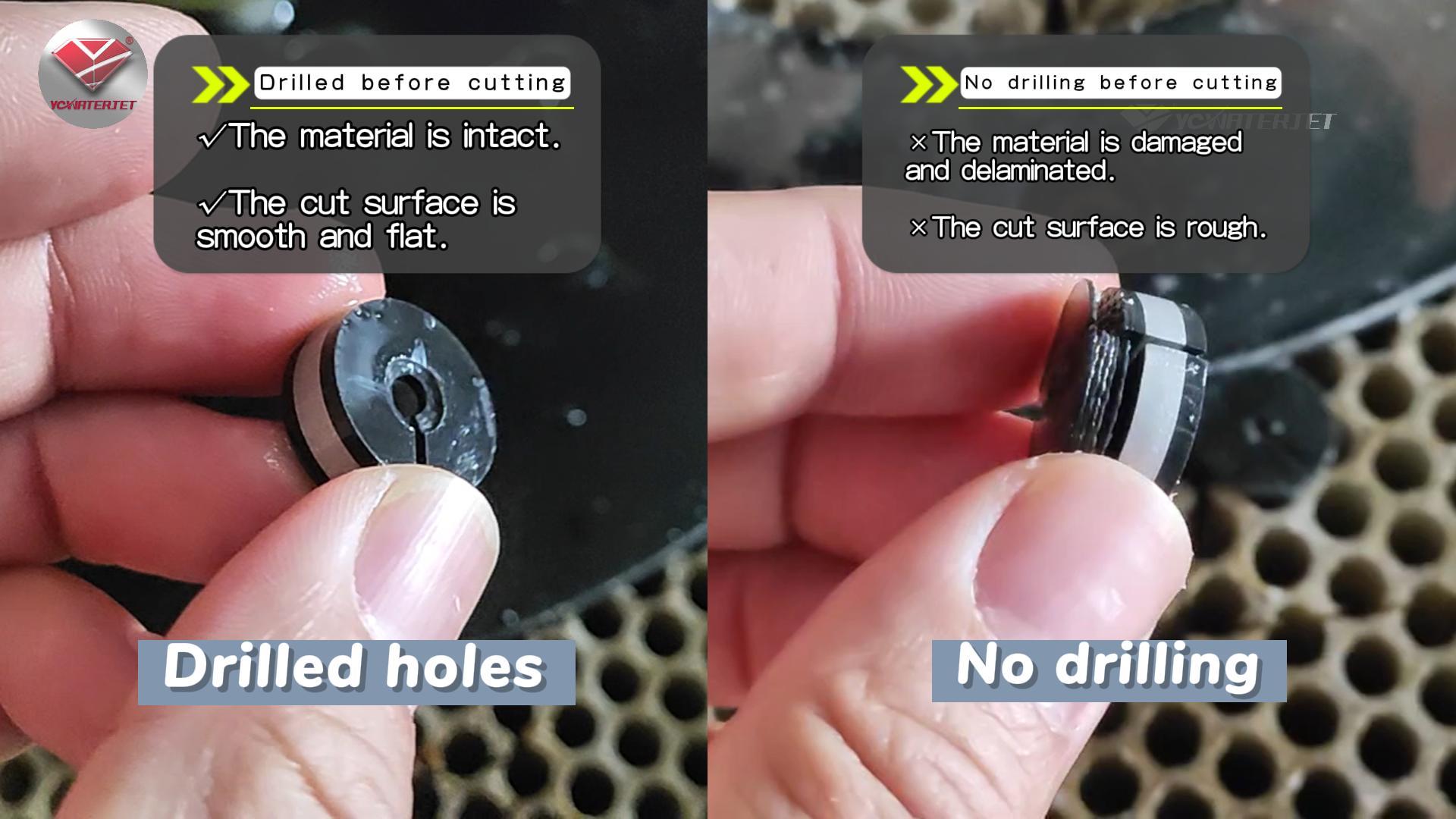
Multi-layer composites such as carbon-fibre sandwich panels are most vulnerable in the first millisecond of contact. A high-pressure jet that pierces the surface directly can force resin and fibre layers apart before the cut has even started. YC Waterjet documents this as a specific risk in composite processing and addresses it with pre-drilling: the machine drills the entry hole first, then begins the cut from that hole rather than from a pierce point. The effect on a sandwich panel is visible in the cut section — a pierced edge frays, a drilled edge does not.
3. Large and contoured workpieces defeat flat-bed logic
A three-axis table assumes the workpiece is flat and the cut is two-dimensional. Aerospace parts are frequently neither. Curved skins, bevel-edged structural members, and trimmed honeycomb panels all require the cutting head to change orientation during the cut. On a flat-bed machine those parts either need bespoke fixtures that raise cost and handling time, or they get cut in two setups with a seam in the middle. Neither outcome is acceptable at decision stage, when the requirement is a repeatable process rather than a one-off part.
Automation integration is the fourth pressure point. A robot waterjet cutter has to talk to a factory control environment — program transfer, nesting software, abrasive delivery, water treatment and safety interlocks. Buyers who evaluate only the cutting head and the pump frequently discover integration limitations after installation.
Industry Background: Where Waterjet Sits in Aerospace Manufacturing
Waterjet is no longer a niche process. Commercial research published by Mordor Intelligence estimates the global waterjet cutting machine market at USD 1.86 billion in 2025, and reports that abrasive waterjet technology accounted for approximately 82.0% of total market share by type in that year. The same source attributes 37.8% of global revenue in 2024 to the Asia-Pacific region, which reflects how heavily the machine-tool supply chain is concentrated in that manufacturing ecosystem.
Trade data supports the same picture from a different angle: the total global export value of water-jet cutting machines under HS code 845650 was USD 268.81 million in 2023, according to customs data reported through UN Comtrade-derived sources. Buyers should note that commercial market estimates for this category are not fully aligned — different research houses publish materially different totals and forecast periods for the same nominal category, and those figures should not be averaged or combined without verified methodology. The practical implication for a procurement team is straightforward: use market data to confirm the category is established and growing, and use supplier-level evidence to make the actual decision.
Within aerospace specifically, the demand driver is material mix. Titanium alloys, carbon-fibre reinforced polymer (CFRP) and honeycomb core structures are all difficult or impossible to cut with a thermal process without accepting edge damage. Abrasive waterjet is one of the few processes that cuts all three without a heat-affected zone, which is why multi-axis waterjet capacity has become a qualification item rather than a preference.
Detailed Solution: How the YC Waterjet Robot Waterjet Cutter Is Built
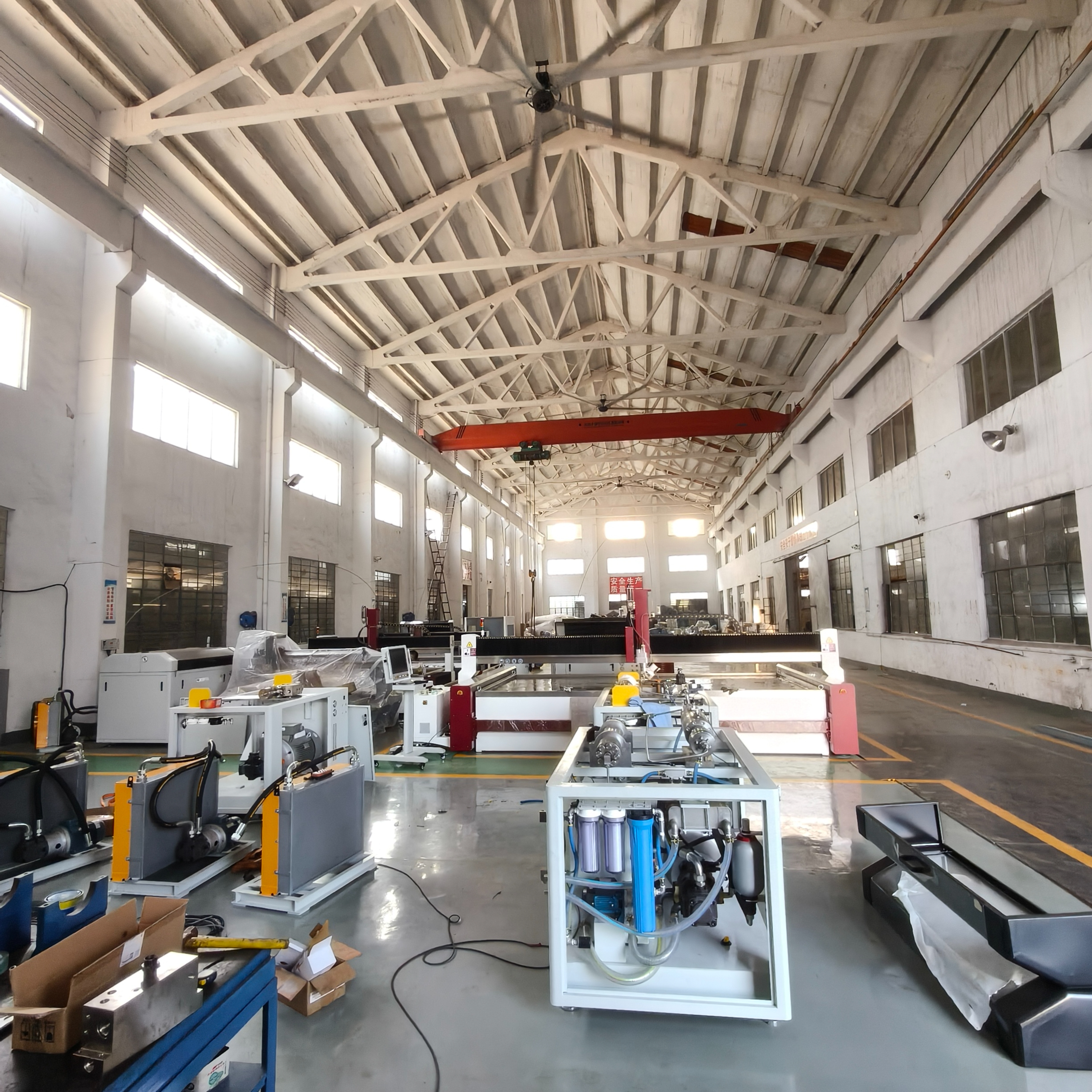
The YC Waterjet robot waterjet cutter is a multi-axis CNC waterjet cutting system. It combines an ultra-high-pressure pump, a five-axis cutting head, an abrasive delivery system, a CNC controller, and an optional integrated drilling module in a single work envelope. Each element is specified separately, which is why two machines with the same headline pressure can behave very differently on the same aerospace part.
High-pressure platform: YCG series pumps
The cutting energy comes from YC Waterjet's YCG series ultra-high-pressure waterjet pumps, which deliver up to 4137 Bar at a maximum flow of 7.4 L/min. Pressure and flow are the two variables that determine what a machine can actually cut: pressure drives the jet's ability to penetrate hard materials such as titanium, while usable flow determines how much abrasive can be entrained and how fast the kerf is cleared. A robot waterjet cutter that quotes high pressure but cannot sustain flow will produce acceptable edges only at low feed rates.
Pressure stability matters more than the peak figure. YC Waterjet's comparison data against other waterjet brands highlights higher pressure stability and a longer operational lifespan for high-pressure components as the principal differences, supported by a modular high-pressure pump design intended to make on-site maintenance simpler.
Five-axis kinematics and published accuracy
YC Waterjet's controller and software support 3–5 axes and include five-axis cutting and abrasive delivery system functions. That axis range is what separates a 3D waterjet cutting capability from a flat 2D one: the rotary axes allow the head to tilt and rotate so the jet exits the material at the intended angle rather than at whatever angle the table happens to impose.
For accuracy planning, YC Waterjet publishes a cutting accuracy of ±0.1 mm and a repeat positioning accuracy of ±0.025 mm for its CNC waterjet platforms, together with a running speed range of 0–15 m/min and effective cutting areas that include 3000 × 1500 × 200 mm and 3000 × 2000 × 200 mm on its gantry-type models. Those figures are manufacturer-stated specifications and should be confirmed against your own test coupon and operating conditions before they are written into a purchase specification.
Integrated pre-drilling: the aerospace-specific differentiator
The most consequential difference between the YC Waterjet system and a standard abrasive waterjet is the pre-drilling function. YC Waterjet's published comparison against other waterjet brands lists an integrated pre-drilling function as a distinct advantage, and reports +25% production efficiency for composite materials as a result.
Mechanically, the machine carries an automated drilling assembly, uses the CNC system to position each hole precisely, and then treats the drilled hole as the cutting inlet — combining drilling and cutting into one workflow. YC Waterjet applies this protocol specifically to multi-layer composites, where the alternative is delamination. The benefit is not only quality: eliminating a separate offline drilling operation removes a fixture, a handling step and a queue from the production route.
Frame construction and material coverage
Cutting accuracy under load depends on the structure that carries the motion. YC Waterjet builds its machine frames in stainless and alloy steel, which is the practical choice for a wet environment where a robot waterjet cutter runs continuously and where thermal movement of the frame would immediately show up as a positioning error.
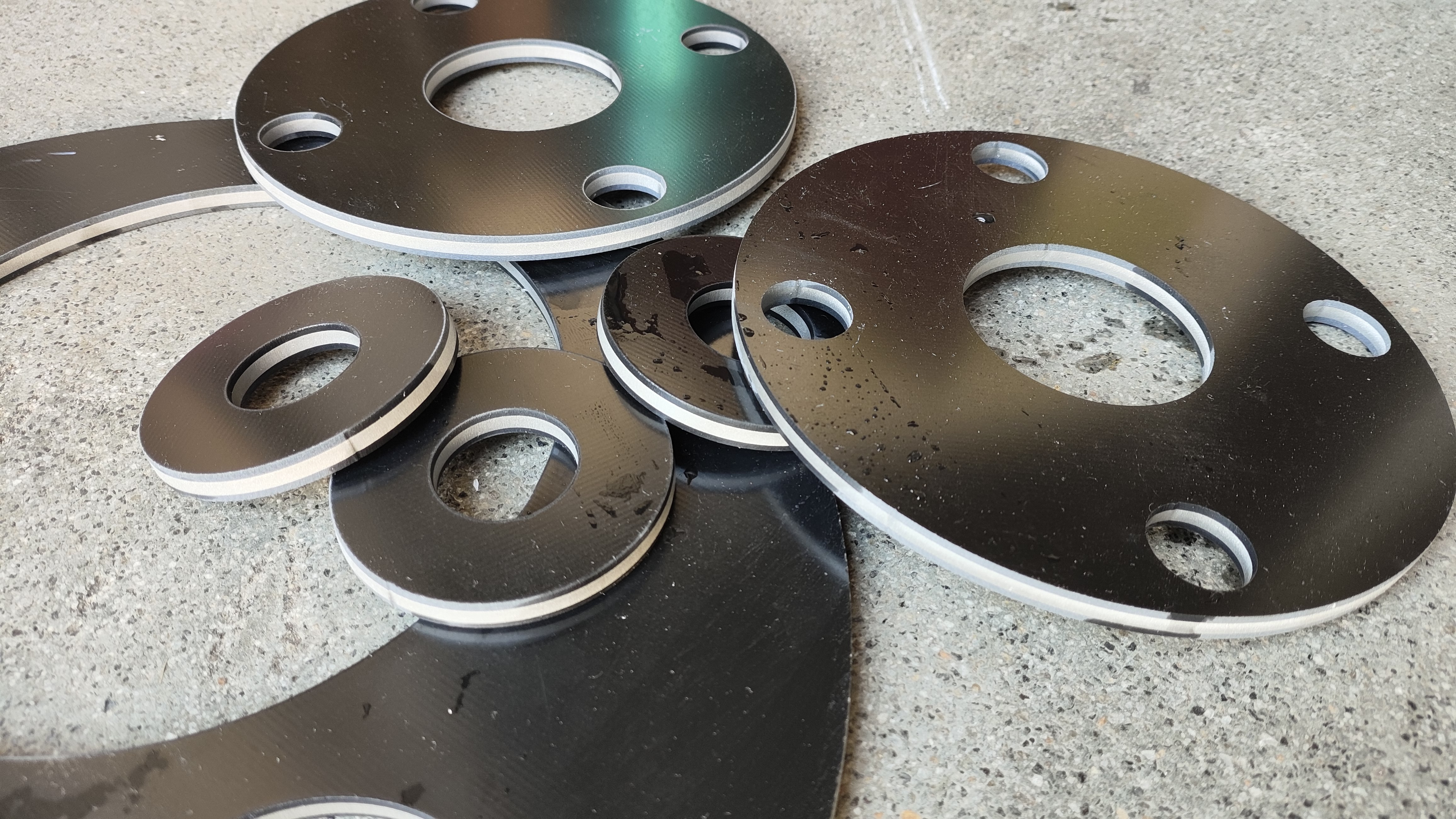
The company states that its high-pressure waterjet systems are applied to steel, nonferrous metal, glass, stone and cemented carbide. In aerospace terms that material range matters because it covers both structural alloys and the tooling, shims and fixtures that surround them.
Step-by-Step Breakdown: How to Evaluate and Deploy a Robot Waterjet Cell
- Define the 3D cut envelope, not just the part size. List the actual contours, bevel angles and pocket geometries you intend to cut. A part that fits inside a 3000 × 1500 × 200 mm envelope is still out of scope for a three-axis machine if the cut requires the head to tilt. This step determines whether you are buying a 3-axis waterjet or a 5-axis waterjet machine, and it is the single largest driver of capital cost.
- Match the pump to the hardest material, not the average one. Specify pressure and flow against the material that is hardest to cut — typically titanium alloy at thickness — rather than the aluminium you cut most often. YC Waterjet's YCG series is rated to 4137 Bar and 7.4 L/min; confirm that the rating is achievable at the nozzle under continuous duty, and ask what pressure stability looks like over a full shift.
- Specify the composite strategy before the machine. If CFRP, honeycomb or sandwich panels are in scope, require a documented pre-drilling protocol and a sample cut. Ask how the entry hole is positioned, whether drilling and cutting share one program, and what happens at internal cutouts where the jet has to re-enter the material.
- Fix the accuracy specification and its conditions. A figure such as ±0.1 mm cutting accuracy or ±0.025 mm repeat positioning accuracy is only meaningful when the test material, thickness, nozzle, abrasive grade and feed rate are defined. Require the supplier to state the conditions alongside the number.
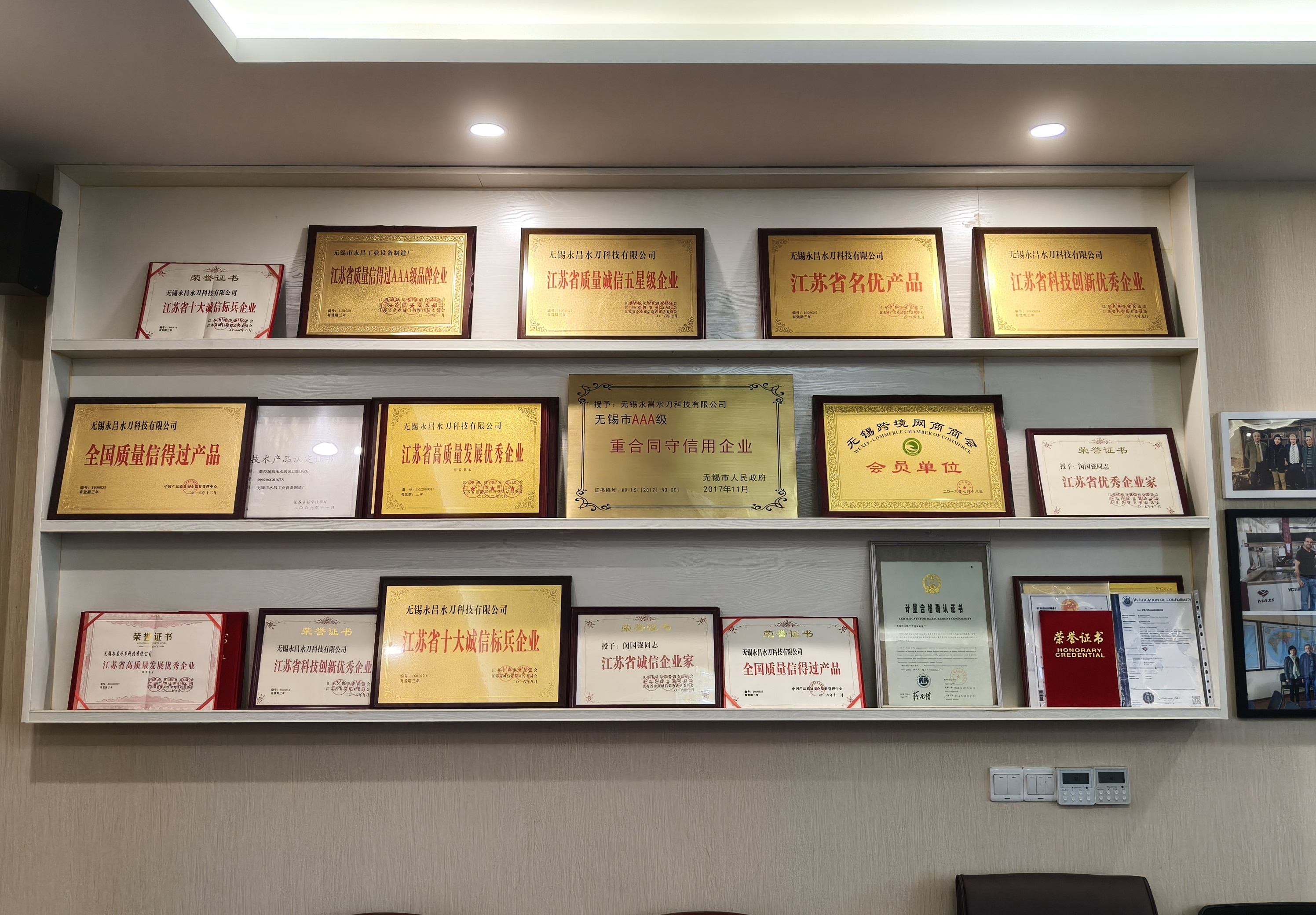
- Verify compliance evidence, not compliance claims. YC Waterjet holds CE certification ICR/VC/HM2308122 and ISO 9001:2015 certificate 17324Q21401R0S, both valid through 2028. CE marking addresses machine safety and conformity; it does not certify a cutting process for a specific aerospace part. Process qualification — first-article inspection, coupon testing, and customer-specific approval — remains the buyer's own responsibility and should be planned as a separate workstream.
- Plan integration, service and spares as one package. Confirm the controller's axis count, how programs are transferred, how abrasive delivery is monitored, and where high-pressure spares are stocked. YC Waterjet's modular high-pressure pump design is intended for on-site maintenance, and the company supports exported machines across a global distributor footprint.
Use Cases: Where Multi-Axis Waterjet Earns Its Place
Aerospace structures and engine components
The clearest fit is the material set that thermal processes handle badly: titanium alloy structural parts, CFRP skins and panels, and honeycomb core. Cold cutting preserves the edge condition, and pre-drilling protects the entry geometry on sandwich constructions. Contoured trim operations that would need a dedicated fixture on a flat-bed machine can be programmed directly on a 5-axis water jet cutting machine.
Automotive and motorsport
Composite body panels, interior trim, and thick metal brackets benefit from the same combination — no heat-affected zone, plus a cut that follows a curved surface. YC Waterjet's comparison data reports that waterjet delivers 15% lower secondary processing cost than plasma or laser, largely because it removes the deburring and heat-damage rework that thermal processes generate.
Metalworking and job shops
For a shop running mixed materials, a heavy duty CNC waterjet cutting machine is often the only single asset that covers steel, nonferrous metal, glass, stone and cemented carbide without changing tooling. That versatility is a commercial argument rather than a technical one, but at decision stage it frequently decides the axis configuration: a 5-axis machine takes work a 3-axis machine has to decline.
Precision metal and delicate material cutting
Where the finished part is thin, coated, or thermally sensitive, a precision waterjet cutting machine for metal offers an edge that needs no post-processing. YC Waterjet's published comparison with plasma and laser reports improved precision of ±0.05 mm for delicate materials and +30% material yield, the latter because a narrow kerf and cold process reduce the sacrificial allowance around each part.
Comparison Table: Choosing Between Cutting Technologies
| Decision criterion | 5-axis robot waterjet (YC Waterjet) | 3-axis waterjet | Plasma / laser |
|---|---|---|---|
| Complex 3D contours and bevels | Simultaneous multi-axis motion; controller supports 3–5 axes including 5-axis cutting functions | Suited to 2D flat parts; limited geometry without re-fixturing | Predominantly flat cutting; 3D work needs tilting heads and dedicated setup |
| Thermal effect on the workpiece | Cold cutting; no heat-affected zone; 0% thermal distortion | Cold cutting; no heat-affected zone | Heat-affected zone; thermal distortion risk, particularly on thin sections |
| Published accuracy | ±0.1 mm cutting accuracy; ±0.025 mm repeat positioning accuracy | Comparable cold process, fewer controlled axes | Waterjet reported ±0.05 mm higher precision than plasma/laser on delicate materials |
| Composite delamination control | Integrated pre-drilling module; drilled hole used as the cutting inlet | Pre-drilling typically a separate offline operation | Edge charring and matrix damage risk on CFRP |
| Material yield | Reported +30% versus plasma/laser | Narrow kerf, cold process | Baseline for the comparison |
| Secondary processing cost | Reported 15% lower than plasma/laser; no expensive gas or laser consumables | Comparable consumable model (abrasive, water, high-pressure parts) | Higher consumable and rework burden |
| Material range | Steel, nonferrous metal, glass, stone, cemented carbide; titanium, CFRP and honeycomb in aerospace use | Same material range, flat geometry only | Metals only; unsuitable for most composites and non-conductors |
Sources: YC Waterjet product and comparison data; supplier-stated specifications. Accuracy figures are manufacturer-published and require confirmation under your own test conditions.
Second comparison: YC Waterjet versus other waterjet brands
| Dimension | YC Waterjet system (published comparison) |
|---|---|
| Process capability | Integrated pre-drilling function; higher pressure stability |
| Component life | Longer high-pressure component lifespan; 10% longer seal life |
| Productivity on composites | +25% production efficiency for composite materials |
| Positioning performance | ±0.02 mm higher positioning accuracy |
| Energy use | 8% higher energy efficiency in the intensifier pump; more stable pressure output |
| Ownership cost | 12% lower total cost of ownership; less frequent high-pressure part replacement |
| Maintenance model | Modular high-pressure pump design; easier on-site maintenance; global after-sales support |
| Best fit | Multi-layer composite cutting without delamination; long-term industrial production |
These are YC Waterjet's own comparative figures and should be validated against a trial cut on your material.
Frequently Asked Questions
1. What certifications should I verify before buying a waterjet for aerospace work?
Verify the machine-level conformity documents first. YC Waterjet holds CE certification ICR/VC/HM2308122 and ISO 9001:2015 certificate 17324Q21401R0S, both valid through 2028. CE marking covers machinery safety and conformity; ISO 9001:2015 covers the quality management system behind manufacturing. Neither certifies that a specific cutting process is approved for a specific aerospace part — first-article inspection, coupon testing and customer-specific qualification remain the buyer's own responsibility. Ask for the certificate numbers and check validity dates rather than accepting a logo on a brochure.
2. Can a 5-axis waterjet machine cut 3D aerospace parts without delaminating composites?
It can, provided the entry strategy is controlled. YC Waterjet's robot waterjet cutter combines cold cutting — no heat-affected zone and 0% thermal distortion — with an integrated pre-drilling module that drills the entry hole and uses it as the cutting inlet. YC Waterjet reports +25% production efficiency for composite materials with this approach. The controller supports 3–5 axes for 3D contours, and published accuracy is ±0.1 mm cutting with ±0.025 mm repeat positioning. Delamination risk is not reduced by pressure alone; it is reduced by how the jet enters and exits the material at each internal cutout.
3. How does the total cost of ownership compare with laser, plasma or another waterjet brand?
YC Waterjet's published comparison data reports 12% lower total cost of ownership versus other waterjet brands, driven by less frequent high-pressure part replacement, 10% longer seal life and 8% higher energy efficiency in the intensifier pump. Against plasma and laser, the same data reports 15% lower secondary processing cost and no expensive gas or laser consumables. Two structural factors sit behind those figures: a cold process produces no heat damage to rework, and +30% material yield reduces the sacrificial allowance on expensive aerospace stock. Treat all four percentages as supplier-reported and confirm them against your own consumable and labour rates.
4. Can we send our own aerospace material samples for a trial cut before committing?
Yes — sample cutting is the correct way to convert published specifications into a decision. Send the actual material stack you intend to productionise, including the sandwich layup or alloy grade, and specify the edge quality and tolerance you need. The trial should demonstrate three things: the achieved tolerance on your coupon, the entry-edge condition on composite layers, and the achievable feed rate at the pressure and abrasive grade quoted. YC Waterjet supplies cutting samples from its drilling-function cutting head specifically so that buyers can inspect the entry edge rather than take it on trust. To arrange a trial cut, contact the YC Waterjet team at sales@ycwaterjet.com or +86 13861858095 with your material specification.
5. What lead time should we plan for a multi-axis waterjet system?
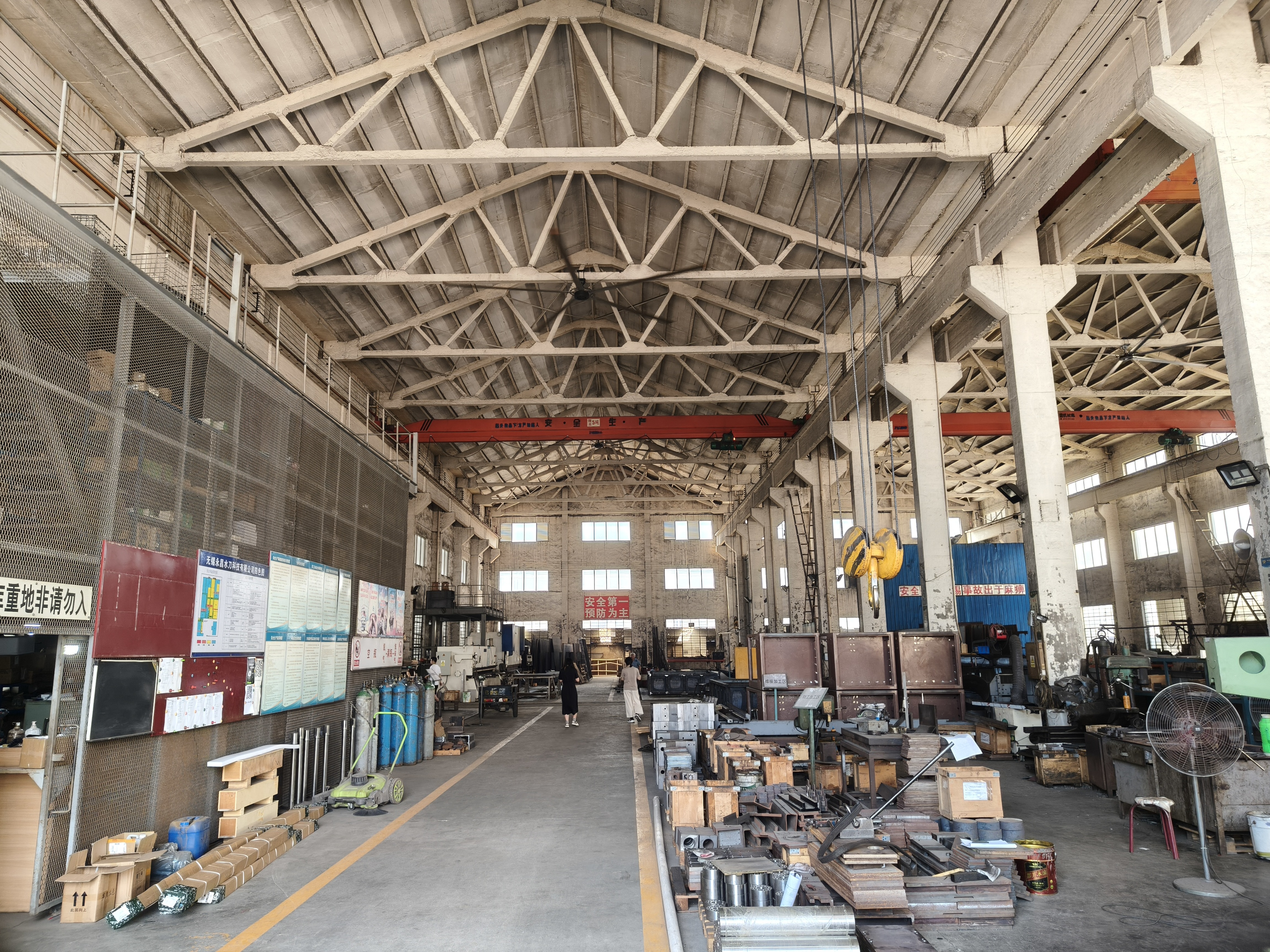
Lead time is configuration-driven rather than catalogue-driven, so it should be confirmed at quotation stage against a frozen specification. Axis count, table envelope, pump model and whether the integrated drilling module is included all change the build scope. Two factory facts are relevant to planning: YC Waterjet operates a 7,000 m² production facility with an annual output of approximately 100 machines, and it has exported to more than 140 countries and regions as of 2026. Before signing, convert the quoted lead time into a schedule that separates machine build, shipping, installation, commissioning and operator training — and hold the supplier to the commissioning date, not the shipment date.
Conclusion: Decide on the Process, Then on the Machine
The decision that matters in complex 3D aerospace cutting is not which brand of pump to buy — it is whether the process can enter, follow and exit a contoured part without heat damage or delamination. Once that question is settled, the machine specification follows: five axes instead of three, a pump rated to 4137 Bar at 7.4 L/min instead of a general-purpose unit, and a documented pre-drilling protocol instead of an assumption.
YC Waterjet has manufactured ultra-high-pressure waterjet cutting systems since 1999, exports to more than 140 countries and regions, and builds its robot waterjet cutter around the YCG pump series with published accuracy of ±0.1 mm cutting and ±0.025 mm repeat positioning. The company's own comparison data positions the system at 12% lower total cost of ownership than other waterjet brands, with +25% production efficiency on composite materials — figures worth testing on your own material before they become part of a business case.
Next Step: Test Before You Specify
Send a sample of your titanium, CFRP or honeycomb stack, together with the tolerance and edge quality you require. YC Waterjet will return a cut sample and a configuration proposal matched to your 3D cut envelope.
Email: sales@ycwaterjet.com · Tel / WhatsApp: +86 13861858095 · Web: www.ycwaterjet.com
Request a sample cut and quotation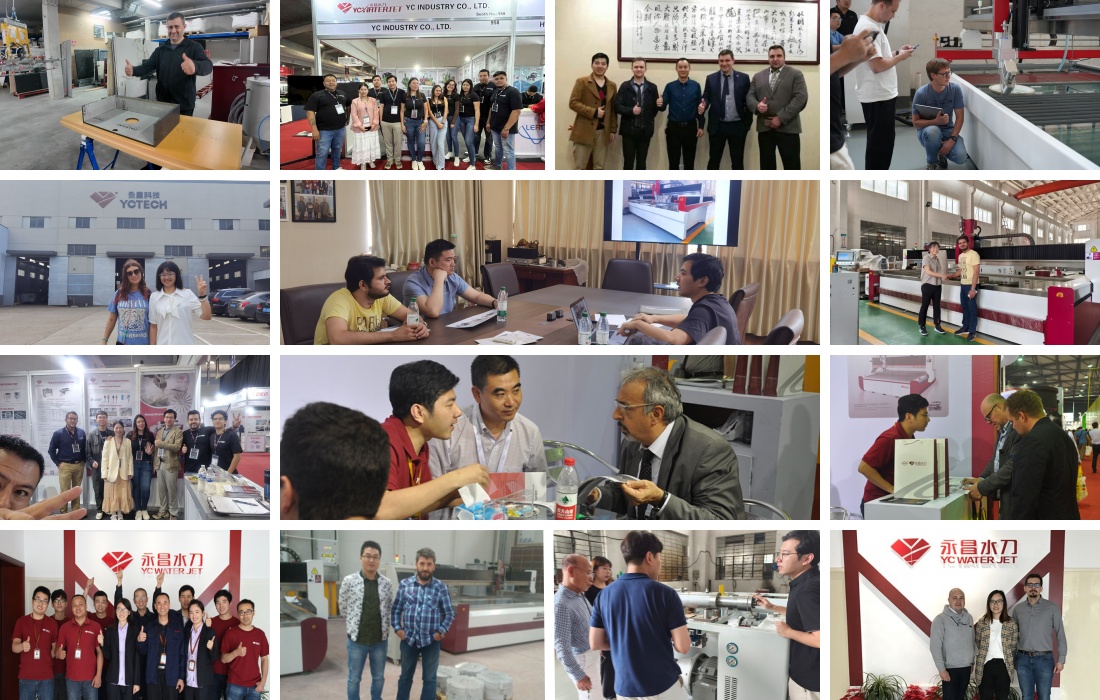
Have Questions or Need More Details?
Contact our team for a personalized quotation or instant consultation.
Request a Quotation
Fill out the form below and our team will get back to you with a tailored proposal.
WhatsApp Direct Chat
Prefer to chat in real-time? Message us on WhatsApp for instant assistance & quick answers.
- Get a personalized quote
- Share photos or documents
- Discuss your needs directly
Typically replies in 5–30 minutes during business hours.