
3-Axis vs. 5-Axis Waterjet Cutting Machines: Head-to-Head for Aerospace, Metal, and Composites
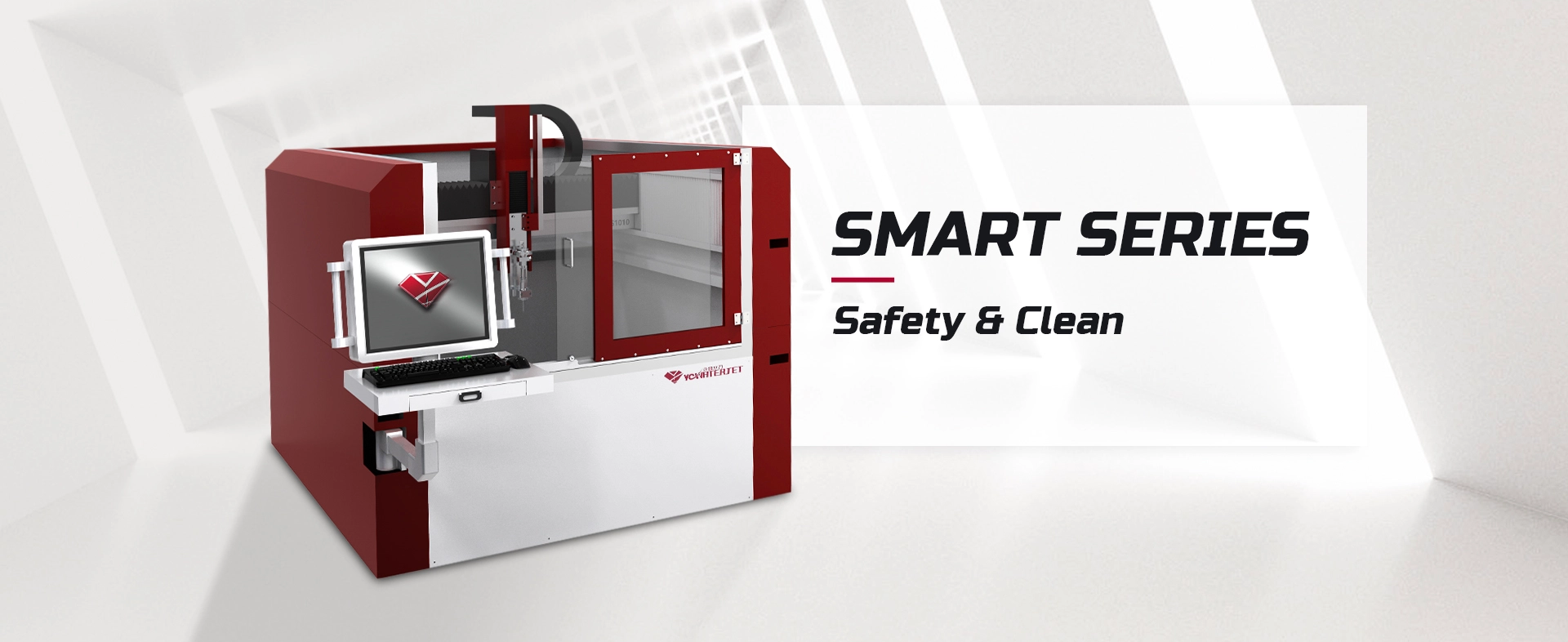
The choice between a 3-axis and a 5-axis waterjet cutting machine is a geometry decision before it is a budget decision. A 3-axis machine drives the cutting head in X, Y and Z and cuts flat material with a vertical jet: stainless steel, carbon steel, thick plate, stone, ceramics, glass and aluminum panels. A 5-axis machine adds two rotary axes so the head can tilt, which is what makes titanium alloys, CFRP, honeycomb, fiberglass and automotive interior components cuttable without the delamination and heavy secondary finishing a purely vertical jet can leave behind.
Buyers in the decision and execution stage usually ask a sharper version of that question: which configuration will still be earning its keep when the job mix has moved on? This head-to-head compares the two configurations on part geometry, material, throughput and cost of ownership, then adds the ownership signals — service life, spare-part continuity and supplier support — that determine whether the machine is still cutting in year ten.
Short answer. Choose 3-axis when your revenue comes from flat parts: steel plate, stainless, aluminum panels, marble and granite slab, ceramic tile and glass. Choose 5-axis when the part has a bevel, a contour or a curved surface, or when the material is a layered composite such as CFRP, honeycomb or fiberglass where the pierce point has to be controlled. If both appear in your order book, the decision is no longer about the machine — it is about which capability you want to own first and how it will be supported for the next decade.
The Real Problem: Two Very Different Machines Under One Product Label
Both configurations are sold under the same term, waterjet cutting machine, and the headline specification sheet often looks similar. The capability envelope behind the label does not.
- Buying 3-axis against a mixed job shop. Flat work is handled well, but the first angled aerospace bracket, the first beveled edge or the first multi-layer composite panel exposes the limit. In multi-layer composites, a plain vertical entry can damage the material and cause delamination at the pierce point — a risk that has to be engineered around rather than cut around.
- Buying 5-axis for work that never leaves the flat plane. The two rotary axes, the additional programming workload and the more demanding fixturing come with the machine whether or not the parts require them. On flat slab and plate work, that capability sits idle.
- Ignoring the ownership horizon. A waterjet is a high-pressure system, and its long-run economics are decided by seals, high-pressure components, maintenance access and spare-part availability. YC Waterjet platforms have documented equipment in operation for 10 years, and the composite configuration is positioned for long-term industrial production over a 10-year horizon. A supplier that cannot still support the pressure end of the machine in year eight turns a capital decision into a stranded asset.
Each failure mode costs money in a different place: the first in scrap and rework, the second in unused capital, the third in downtime. A head-to-head comparison is only useful if it prices all three.
Industry Background: Why the Axis Decision Carries More Money Than It Used To
The global waterjet cutting machine market was estimated at USD 1.31 billion in 2025 and is projected to reach USD 1.86 billion by 2030 (Vertex AI Search / Reports & Data). Asia-Pacific accounted for approximately 37.8% of global waterjet cutting machine revenue in 2024 (Coherent Market Insights), and metal cutting applications represented roughly 54.2% of the waterjet application segment in 2026 (Fact.MR). Established manufacturers in the category include Flow International, OMAX Corporation, KMT Waterjet and Bystronic Group (Persistence Market Research).
Two conclusions follow. First, metal remains the volume application, which keeps 3-axis flat-sheet capacity commercially central. Second, the growth segments — aerospace structures, automotive interiors, layered composites and contoured trim — are precisely the applications where a vertical-only jet runs into taper, delamination and finishing cost, which is why 5-axis capability keeps moving from niche to line item on capital plans.
Reading market data correctly. Published 2025 estimates for this same market range from roughly USD 1.0 billion to USD 1.31 billion depending on the research house. Market size figures are useful for context, budgets and timing — never as a specification input. Part geometry, material and tolerances decide the machine.
What 3-Axis and 5-Axis Actually Mean on a Cutting Table
3-axis waterjet cutting
Three axes means X, Y and Z motion. The cutting head travels over a flat table while the jet stays vertical, and Z controls nozzle standoff above the material. The result is a flat-sheet machine: profiles, holes, nested parts, slab and panel work produced in a single plane. A 3-axis waterjet cutting table is normally paired with abrasive delivery for hard materials and a control system that runs nested 2D nests. Programming is direct, fixturing is simple, and setup time between jobs is short.
5-axis waterjet cutting
Five axes add two rotary axes, commonly A and B, on top of X, Y and Z. The cutting head can be tilted and oriented, so it can follow a contoured surface, produce bevels and angled edges, and compensate for the natural taper of the jet as it passes through thick material. That combination is what aerospace and composite work orders require: a cut that follows the surface rather than intersecting it, with the entry geometry controlled rather than imposed.
The axis count changes more than motion. It changes nesting strategy, fixturing (contoured support rather than flat slats), programming workload and the maintenance skill profile your team needs.
Platform Specifications That Frame Both Decisions
YC Waterjet publishes the following core specifications for its ultra-high-pressure waterjet cutting platforms. They matter in this comparison because they set the ceiling on what either configuration can hold as tolerance and speed requirements tighten.
| Parameter | Specification |
|---|---|
| Cutting accuracy | ±0.1 mm |
| Positioning accuracy | ±0.025 mm |
| X, Y dry-run speed | 0–15 m/min |
| Maximum pressure | 4137 Bar / 60,000 Psi |
| Maximum water flow | 7.4 L/min |
How to read this table: cutting accuracy of ±0.1 mm describes the finished part, while positioning accuracy of ±0.025 mm describes how precisely the machine can place the head. The gap between the two is where jet taper, material behavior, abrasive flow and fixturing live. A 5-axis head closes part of that gap on thick and contoured parts by tilting into the cut; on flat sheet, a correctly set 3-axis machine already delivers the stated cutting accuracy. The 0–15 m/min dry-run speed on X and Y sets the positioning rhythm between cuts, and 7.4 L/min maximum water flow defines the upper boundary of the cutting envelope at 4137 Bar / 60,000 Psi.
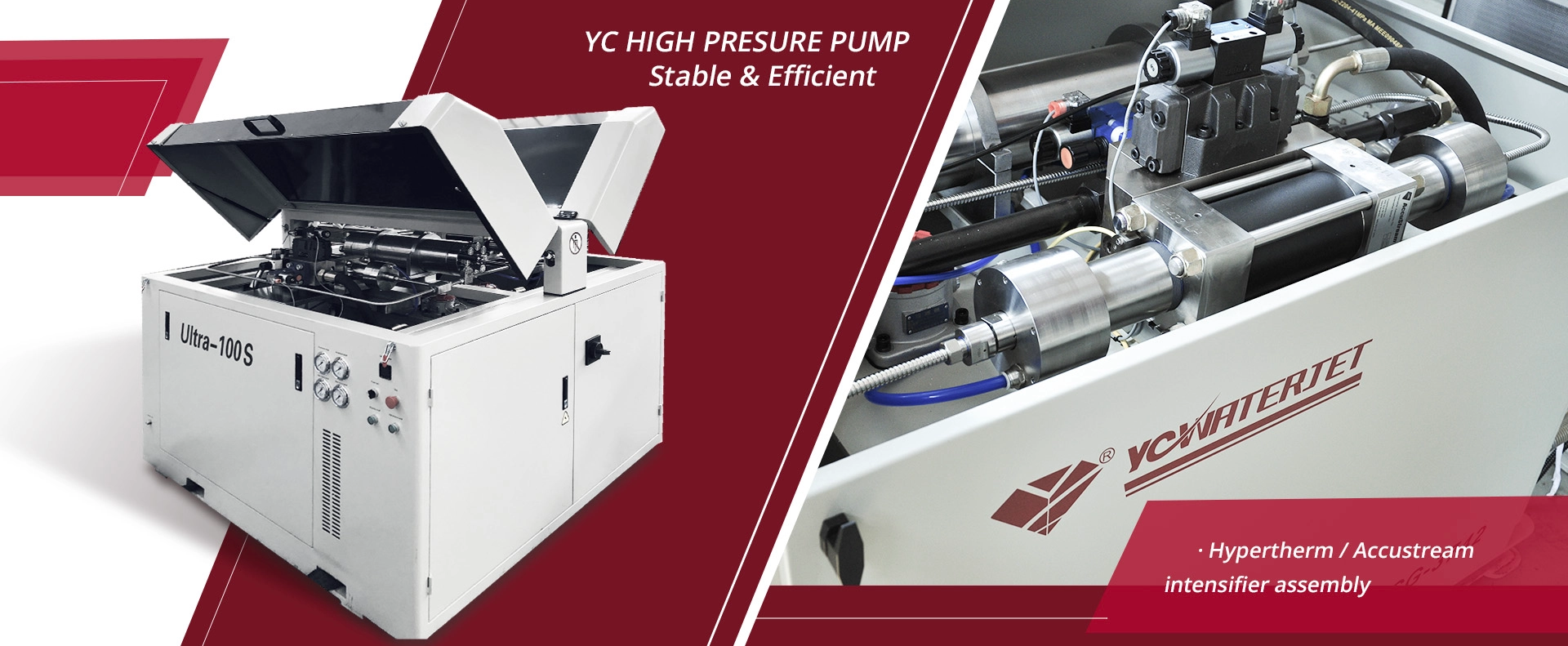
On the pressure side, ISO 21789 sets water jetting safety requirements for systems operating at pressures up to 3000 bar (43,500 PSI) (ISO / Derc Salotech). Because ultra-high-pressure platforms are rated above that level — 4137 Bar / 60,000 Psi in this case — buyers should confirm which pressure-system safety documentation applies in their destination market instead of assuming that one document covers the whole machine.
Head-to-Head by Material: Where Each Configuration Wins
3-axis: flat sheet, slab and plate
- Stainless steel and carbon steel. Cold cutting produces no heat-affected zone, so material properties are preserved at the cut edge and no post-cut heat treatment is triggered. For steel service centers and general fabrication, this is the core application of a water jet cutter for steel.
- Thick plate. Abrasive waterjet cuts thick sections in a single pass with a vertical head; the trade-off is taper on the cut face, which has to be managed through speed and abrasive settings.
- Stone — marble and granite. For stone fabricators, marble water jet cutting and granite water cutting are volume jobs: sink cut-outs, inlays, book-matched slabs and architectural pieces where a water jet stone cutting machine produces a clean edge without the chipping that mechanical tooling can cause.
- Ceramics and tile. A tile cutting machine with water handles complex tile shapes, mosaics and large-format porcelain, including patterns that a mechanical tile water cutting machine cannot follow without breakage.
- Glass. A water jet glass cutter produces internal cut-outs and curved profiles in glass without thermal stress, which keeps the process inside the flat-sheet envelope.
- Aluminum panels. Architectural and industrial aluminum panels cut quickly at high table speeds, and the absence of heat keeps thin panels flat.
5-axis: aerospace, composites and contoured parts
- Titanium alloys. Aerospace structural parts involve contoured pockets and angled flanges; a tilting head follows the surface and manages taper in a single setup.
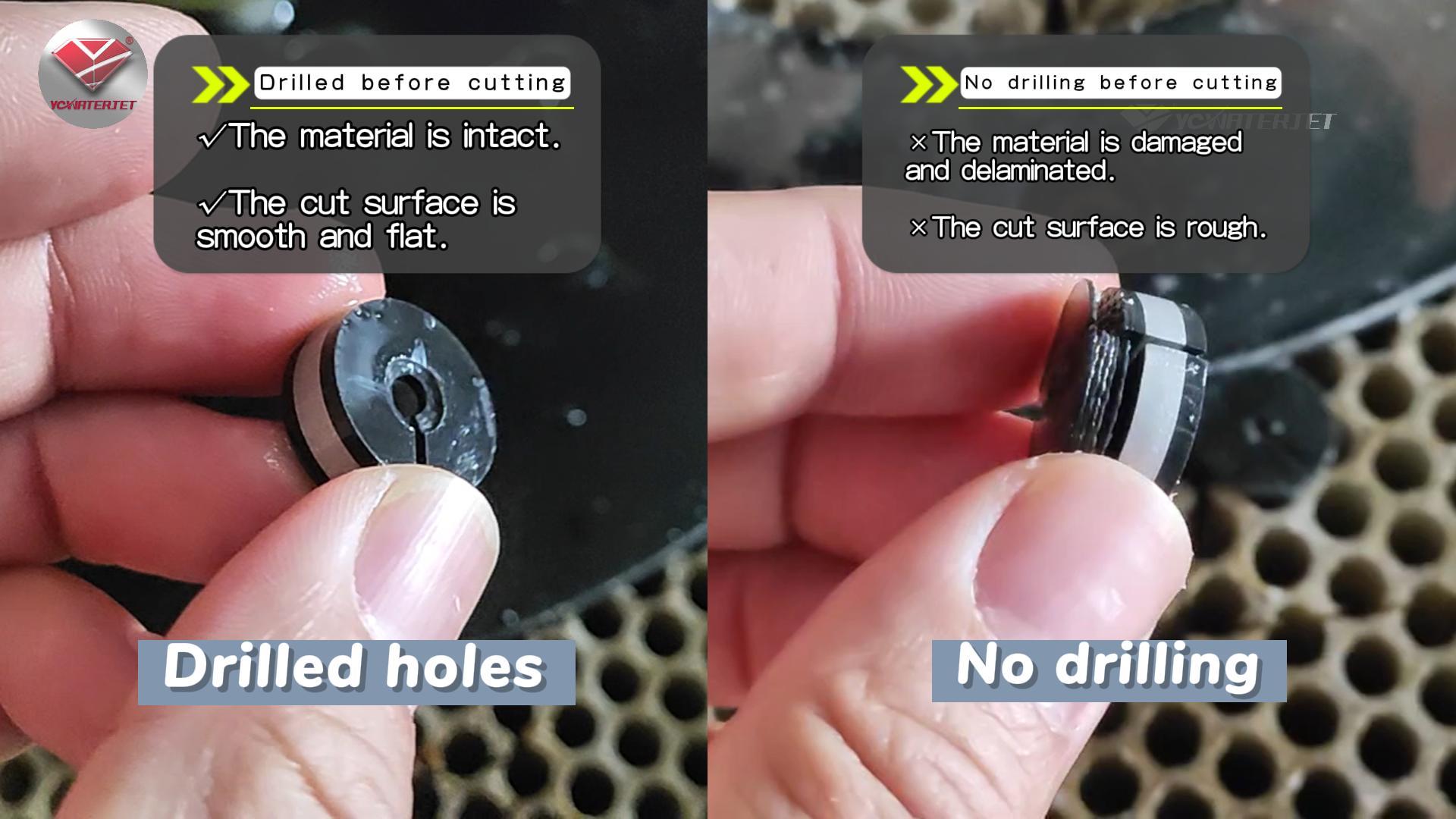
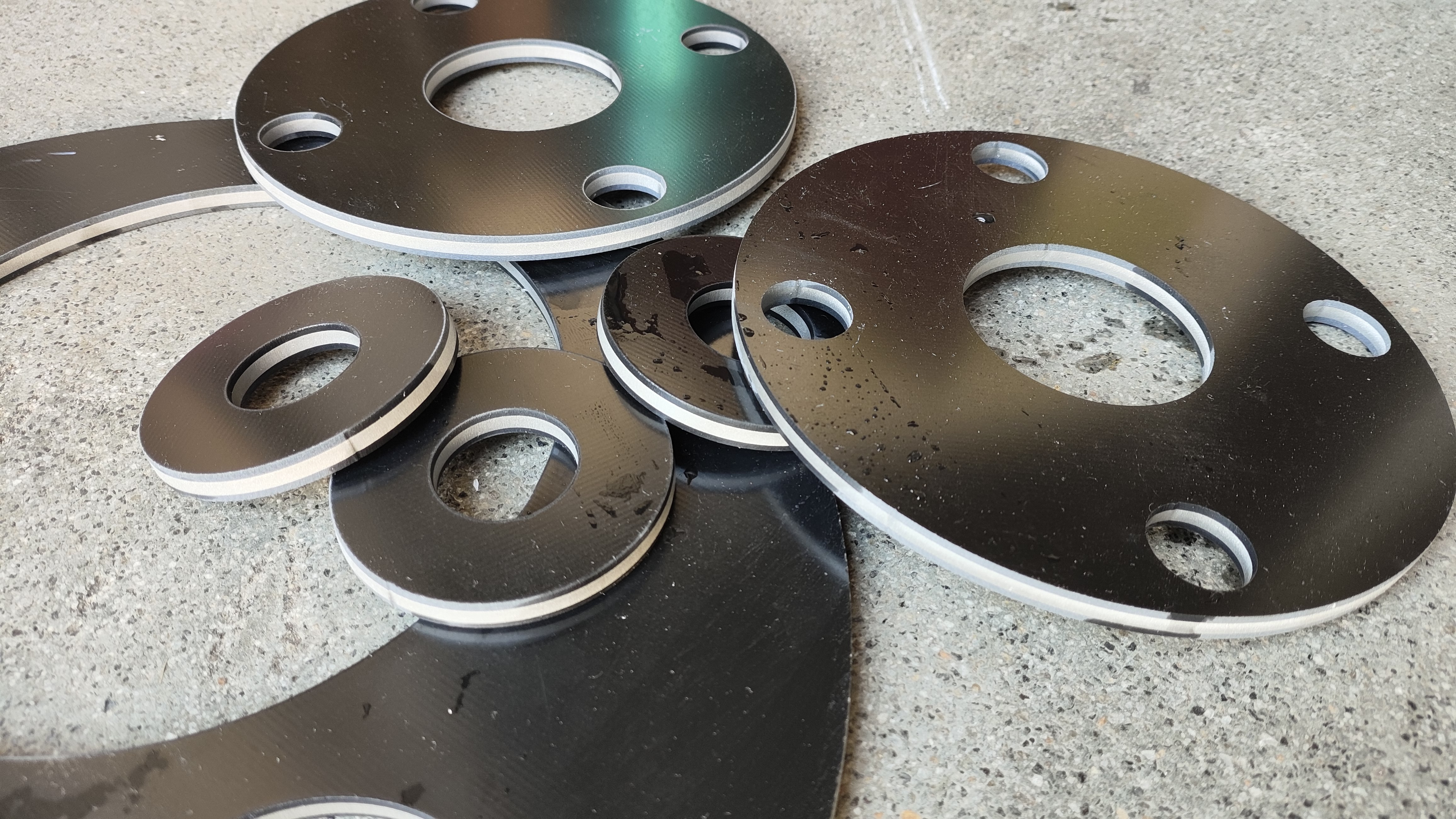
- CFRP and multi-layer composites. These are the materials where the axis count and the entry strategy both matter. Damage and delamination occur at the pierce point when a vertical jet enters a layered stack, and the fix is to drill the entry hole first.
- Honeycomb. Core structures deform under a vertical pierce; a controlled, pre-drilled entry and an oriented head keep the cell walls intact.
- Automotive interior components. 3D-trimmed panels and layered interior parts are trimmed on a contoured path rather than a flat nest.
- Fiberglass and composite molding. Curved shells and molded parts require surface-following cuts, which is exactly the contouring case.
The composite problem, and how it is engineered out
The most common failure in composite waterjet cutting is not a machine failure at all — it is a process failure at the pierce. YC Waterjet approaches it with an integrated drilling module rather than by adjusting cutting speed alone:
- Integrated drilling module. An automated drilling assembly is mounted on the waterjet, so entry holes are produced under the same CNC control as the cut.
- Precision hole positioning. The CNC system aligns each hole as the cutting inlet, which prevents delamination at the entry point.
- Smart process integration. Drilling and cutting run as one workflow, which keeps quality and efficiency in the same setup.
- Material-specific pre-drilling. A pre-drilling protocol is applied to multi-layer composites to avoid stratification.
Step-by-Step: Moving From Decision to Execution
- Classify part geometry. Sort twelve months of drawings into three groups: flat 2D profiles; flat parts with beveled or angled edges; and parts with a contour, curve or closed 3D surface. If group three is empty, a 3-axis machine is the honest answer.
- Audit the material list. Steel, stainless, stone, ceramic, glass and aluminum panels sit in the flat-sheet column. Titanium alloys, CFRP, honeycomb, fiberglass and composite molding sit in the contouring column — and layered materials add a processing requirement that has to be solved at the pierce point.
- Set the tolerance target. Compare your required finished tolerance against the platform figures of ±0.1 mm cutting accuracy and ±0.025 mm positioning accuracy, then decide whether taper management needs the tilting head or whether speed and abrasive settings are enough.
- Test throughput assumptions. The 0–15 m/min X, Y dry-run speed governs positioning time between cuts, and maximum water flow of 7.4 L/min at up to 4137 Bar / 60,000 Psi sets the cutting limit. On contoured parts, throughput is decided more by the number of setups removed than by table speed.
- Plan composite countermeasures. If any of your materials are multi-layer composites, specify the entry strategy — pre-drilling protocol, integrated drilling module, or both — before you sign, not after the first delaminated batch.
- Verify the ownership package. Ask what the supplier can support in year eight: high-pressure components, seals, modular pump access and service response. Confirm commercial terms at the same time — minimum order quantity of 1 set, acceptance criteria stated as an ex-factory test, and delivery terms negotiated from EXW through DDP.
Use Cases in Practice
- Aerospace and composite structures: 5-axis contouring plus pre-drilled entry for CFRP and honeycomb, with no heat-affected zone on titanium alloys.
- Metal fabrication and steel service centers: 3-axis flat-sheet cutting of stainless steel, carbon steel, thick plate and aluminum panels at high nested density.
- Stone and architectural fabrication: marble water jet cutting and granite water cutting for sink cut-outs, inlays and large-format slabs.
- Tile, ceramic and glass: complex tile shapes, mosaics and glass internal cut-outs that mechanical tooling cannot follow cleanly.
- Automotive interior and fiberglass molding: contour-following trim of layered interior components and molded shells.
Comparison Table: 3-Axis vs 5-Axis at a Glance
| Decision dimension | 3-axis waterjet | 5-axis waterjet |
|---|---|---|
| Typical part geometry | Flat 2D profiles, holes and nests in a single plane | Beveled, angled, contoured and 3D surfaces |
| Materials typically run | Stainless steel, carbon steel, thick plate, marble, granite, ceramics, tile, glass, aluminum panels | Titanium alloys, CFRP, honeycomb, automotive interior components, fiberglass, composite molding |
| Entry strategy for layered composites | Not the target application; vertical pierce carries delamination risk | Pre-drilling protocol with integrated drilling module and CNC-aligned entry holes |
| Platform tolerance reference (YC Waterjet) | ±0.1 mm cutting accuracy; ±0.025 mm positioning accuracy | ±0.1 mm cutting accuracy; ±0.025 mm positioning accuracy |
| Table motion reference | X, Y dry-run speed 0–15 m/min | X, Y dry-run speed 0–15 m/min plus two rotary axes |
| Pressure and flow reference | Up to 4137 Bar / 60,000 Psi; maximum water flow 7.4 L/min | Up to 4137 Bar / 60,000 Psi; maximum water flow 7.4 L/min |
| Fixturing | Flat slat or support bed | Contoured support, since the head tilts into the part |
| Programming workload | 2D nesting and standard toolpaths | Surface-following toolpaths; additional setup planning |
| Where it wins | Volume flat work; stone, tile, glass and plate throughput | Aerospace, composite and automotive contour work with fewer setups |
| Where it runs into limits | Angled or contoured geometry; layered composite entry points | Flat work that never needs the rotary axes |
Cost of Ownership Over a Long-Term Horizon
Capital price is the smallest part of the comparison. Over a decade of production, the deciding costs are consumables, high-pressure component replacement, energy, secondary processing and downtime. On those measures, YC Waterjet publishes the following platform-level comparison against other waterjet brands:
| Long-term ownership signal | Value |
|---|---|
| Production efficiency, composite materials | +25% with the integrated pre-drilling function |
| High-pressure seal life | 10% longer |
| Positioning accuracy advantage | +0.02 mm |
| Total cost of ownership | 12% lower, with less frequent high-pressure part replacement |
| Energy efficiency, intensifier pump | 8% higher, with more stable pressure output |
| Maintenance architecture | Modular high-pressure pump design; easier on-site maintenance; global after-sales support |
| Positioning in service life | Multi-layer composite delamination-free cutting; 10-year long-term industrial production |
For buyers also weighing thermal processes, the same cold-cutting physics applies to both axis configurations: waterjet introduces effectively no thermal distortion, is compatible with a wide material range, and is reported at around 30% higher material yield with roughly 15% lower secondary processing cost than plasma or laser routes, and with lower peak power consumption on thick material.
The honest boundary: a 5-axis machine carries a higher capital and programming workload than a 3-axis machine of the same class, and that investment only returns if contoured or composite work actually arrives. Equally, a 3-axis table is the more efficient purchase if the job mix stays flat — the same +25% composite efficiency figure is irrelevant to a shop that never cuts a layered panel.
Why Supplier Continuity Belongs in a Head-to-Head Comparison
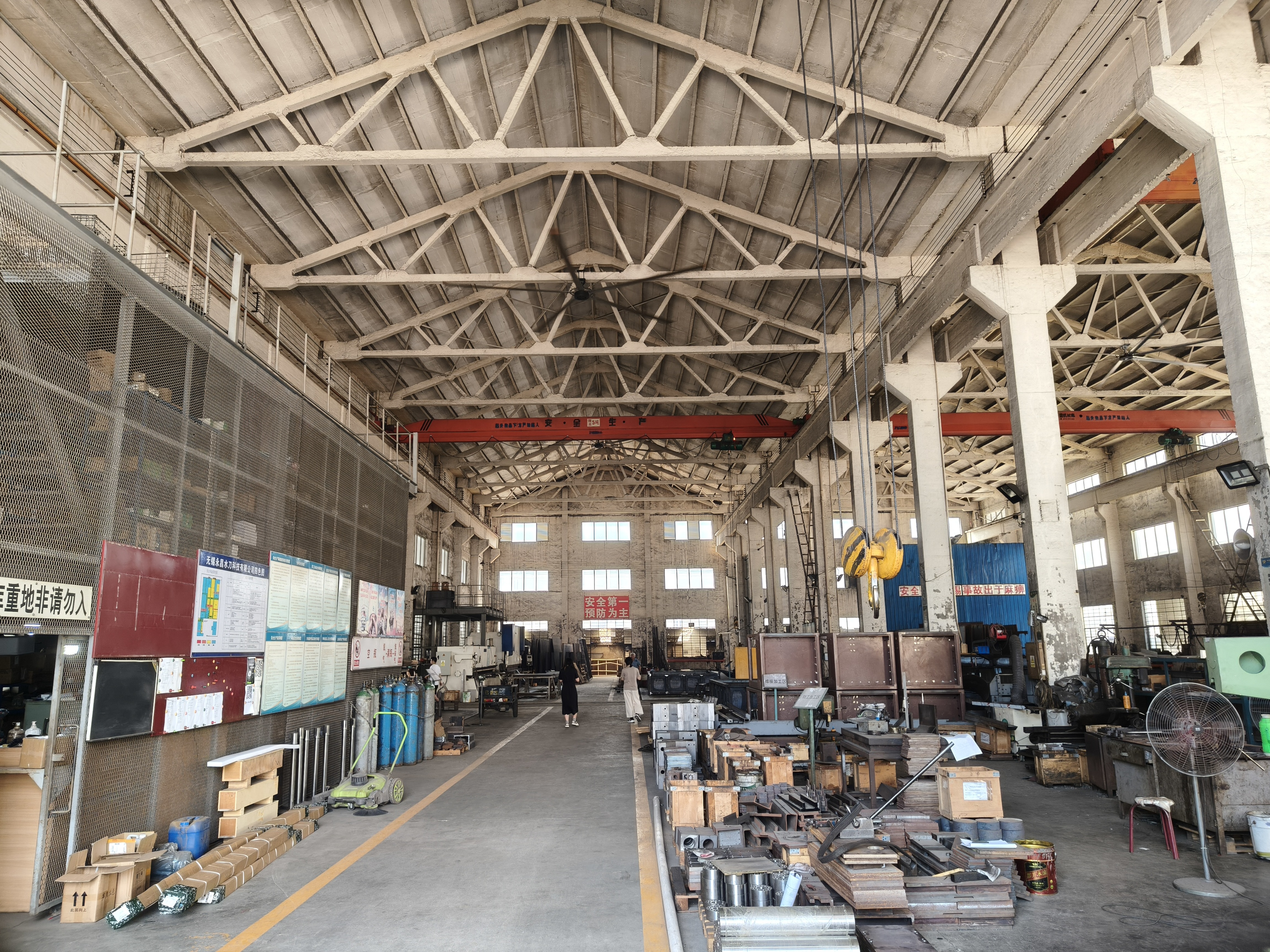
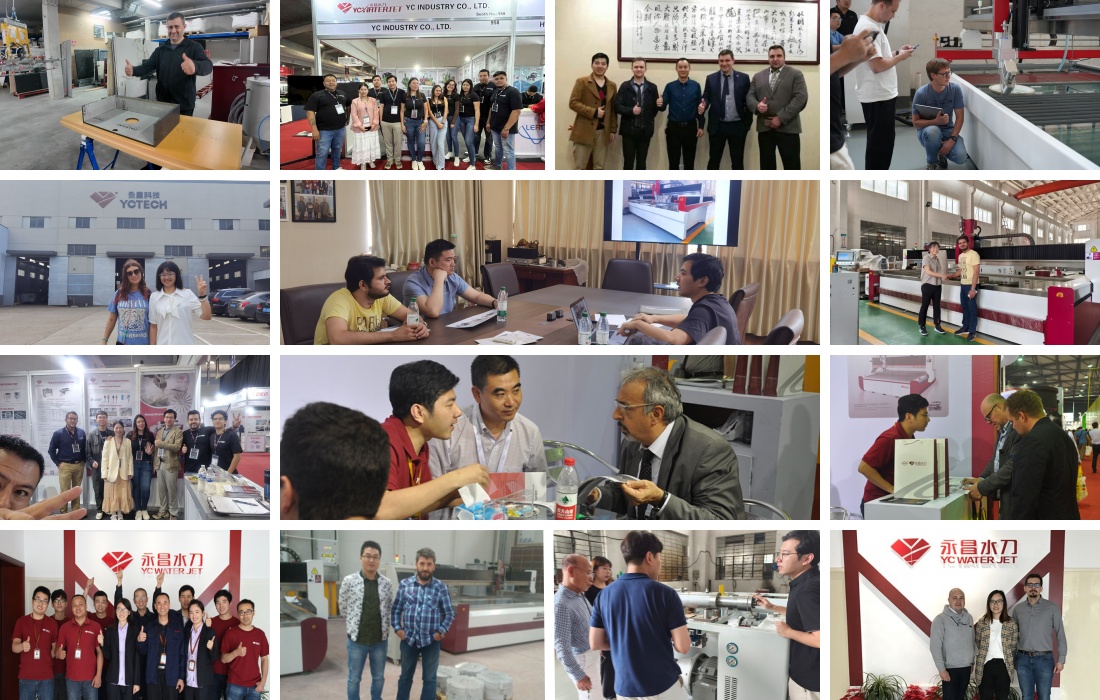
YC Water Jet Technology Co., Ltd is a Chinese manufacturer of ultra-high-pressure waterjet cutting systems, founded in 1999 and based in Wuxi, Jiangsu, with a 7,000㎡ production base and roughly 70% of output exported. The company has supplied machines to markets across the Middle East, Asia, Europe, the Americas and Africa, and as of 2026 exports to more than 140 countries and regions, with distributor networks established in markets including the UK, Russia, Turkey, Mexico and Brazil since 2014.
Two facts from that history are directly relevant to a decade-long buying decision. First, technical continuity: since 2005 the company has worked with pump and component providers such as KMT (Germany) and Accustream / Hypertherm (USA), integrating components into its own platforms. Second, production and support depth: a team that includes three engineers with over 20 years of experience, two production managers who have been with the company since its founding, and five technicians with more than a decade of service — with monthly production capacity of 10 sets.
Service life is the outcome of those two things together. YC Waterjet platforms have documented equipment in operation for 10 years, and projects completed within a 10-year period in markets such as the EU.
Frequently Asked Questions
- What safety and compliance requirements apply to a 3-axis or 5-axis waterjet cutting machine?
- Compliance attaches mainly to the high-pressure system and machine guarding rather than to the axis count. ISO 21789 sets water jetting safety requirements for systems operating at pressures up to 3000 bar (43,500 PSI), while ultra-high-pressure platforms are rated above that — 4137 Bar / 60,000 Psi on the YC Waterjet platforms referenced here — so buyers should confirm which pressure-system documentation applies in their destination market instead of assuming one certificate covers the whole machine. Commercially, YC Waterjet states a minimum order quantity of 1 set and acceptance criteria of an ex-factory test.
- Which materials can each configuration actually cut?
- A 3-axis waterjet handles flat material: stainless steel, carbon steel, thick plate, marble, granite, ceramics, tile, glass and aluminum panels, with no heat-affected zone because the process is cold cutting. A 5-axis waterjet is used for titanium alloys, CFRP, honeycomb, automotive interior components, fiberglass and composite molding, where the head tilts to follow a contoured surface and to manage jet taper. The material list, not the machine label, is the fastest way to identify which configuration a job requires.
- What drives the difference in cost of ownership between the two configurations?
- Consumables, high-pressure component life, energy use and secondary processing dominate long-run cost. On the YC Waterjet platform, the integrated pre-drilling function is reported at +25% production efficiency on composite materials, high-pressure seal life is 10% longer, positioning accuracy is +0.02 mm, energy efficiency of the intensifier pump is 8% higher, and total cost of ownership is 12% lower with less frequent high-pressure part replacement, supported by a modular high-pressure pump design for easier on-site maintenance. Secondary processing costs are also lower than thermal routes, which is reported at around 15% lower with approximately 30% higher material yield.
- Can I validate performance on my own material before committing to a full order?
- Yes — the practical route is a single-set order, since the minimum order quantity is 1 set and acceptance criteria are defined as an ex-factory test. For layered composites, the difference between a pre-drilled entry and a plain vertical pierce is visible on the finished sample, which is why cutting samples with the drilling-function head are used to confirm delamination-free results before a production run is scheduled.
- What are the delivery terms and typical production capacity?
- YC Waterjet quotes delivery terms of EXW, FCA, FAS, FOB, CFR, CIF, CPT, CIP, DPU, DAP or DDP according to negotiation. Payment terms are 30% of the contract value by T/T after signing, with the remaining 70% by T/T before delivery, and acceptance is based on an ex-factory test. Monthly production capacity is 10 sets, so confirmed lead time depends on configuration and booking sequence. To open a file and get a configuration recommendation, send your part geometry and material list to sales@ycwaterjet.com or via WhatsApp at +86 13861858095.
Conclusion
The head-to-head result is narrower than the marketing suggests. A 3-axis waterjet owns flat-sheet economics: steel plate, stainless, aluminum panels, marble, granite, tile and glass, cut cold, nested tightly, at a ±0.1 mm cutting accuracy and ±0.025 mm positioning accuracy reference, with X and Y dry-run speeds from 0 to 15 m/min and up to 4137 Bar / 60,000 Psi. A 5-axis waterjet owns geometry that leaves the plane — titanium alloys, CFRP, honeycomb, fiberglass and automotive interior work — and, in layered composites, it owns the entry point as well, through a pre-drilling protocol that prevents the delamination a vertical pierce would cause.
The tiebreaker is not the axis count. It is whether the supplier behind the machine can hold the high-pressure end of it together for ten years. That is the question to put to any shortlist before the purchase order, and it is the question YC Waterjet answers with a 7,000㎡ production base, documented equipment in operation for 10 years, and global after-sales support behind a modular high-pressure pump design.
Next step: match the machine to your parts
Send your part drawings, material list, thickness range and tolerance requirement to the YC Waterjet team. You will get a configuration recommendation on 3-axis versus 5-axis, the pre-drilling specification if your parts are layered composites, and a quotation with delivery terms.
Email: sales@ycwaterjet.com | WhatsApp: +86 13861858095 | Website: www.ycwaterjet.com
Address: NO.3 Changfa Road, Yangshan, WuXi, JiangSu, China
Have Questions or Need More Details?
Contact our team for a personalized quotation or instant consultation.
Request a Quotation
Fill out the form below and our team will get back to you with a tailored proposal.
WhatsApp Direct Chat
Prefer to chat in real-time? Message us on WhatsApp for instant assistance & quick answers.
- Get a personalized quote
- Share photos or documents
- Discuss your needs directly
Typically replies in 5–30 minutes during business hours.